
Ohio Court Records After Arrest
A booking record and a court record are related, but they are not the same record. The booking record is created when a person is processed into a county, regional, or municipal jail. The court record begins when a complaint, information, indictment, motion, warrant return, bond order, or sentencing entry is filed with the court. For many Ohio users, the case record is the only place that shows the final filed charges after the arrest.
Ohio does not provide one single statewide public portal for every trial-court criminal case. The Supreme Court of Ohio has a public docket for Supreme Court cases, but trial-level criminal, municipal, county, common pleas, juvenile, and appellate records are normally maintained by local courts or clerks. The county directory is the route down to the local inmate site, while the Ohio courts directory helps identify the proper court system.
The Ohio courts directory is the statewide routing source when court records after an arrest must be found through a local clerk.
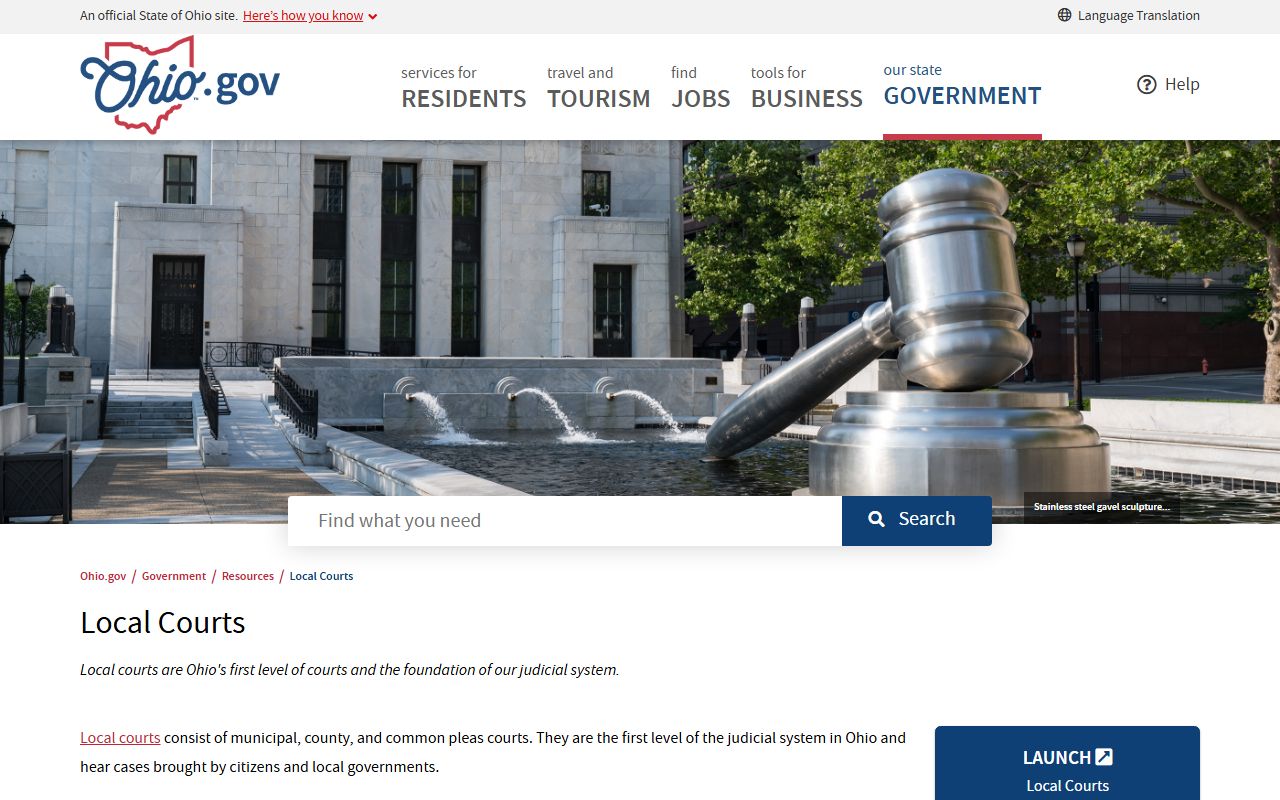
Use the directory to pivot from custody information to the court that controls charge status, bond, and sentencing records.
Arrest to Ohio Court Records
The normal path is arrest, booking, first appearance, charging document, docket entries, plea or trial, and disposition. The order can vary by court and case type. A person may be booked on one charge, then face amended, reduced, added, or dismissed charges after prosecutor review. That is why jail records and court records after a jail arrest should be checked together.
- Find the holding county or regional jail through the roster.
- Identify the court named on the charge, warrant, or bond record.
- Search the local clerk or court by defendant name or case number.
- Read the charging document and docket entries rather than relying only on booking text.
- Check later entries for plea, dismissal, sentence, appeal, sealing, or expungement activity.
Ohio Charging Documents
Ohio court records after an arrest often turn on the charging document. A complaint can start many misdemeanor and initial felony matters. An information is a prosecutor-filed charge used in appropriate felony contexts. An indictment is returned by a grand jury and is common in serious felony prosecution. The charging document is more reliable than a booking label when the question is what the state is formally pursuing.
| Document | Filed by | What it does |
|---|---|---|
| Complaint | Officer or prosecutor | Starts or supports a criminal case after arrest. |
| Information | Prosecutor | States felony charges without using an indictment route where allowed. |
| Indictment | Grand jury | Formally charges serious felony matters after grand-jury action. |
The Supreme Court of Ohio public docket applies to Supreme Court cases, not ordinary trial-court jail-arrest cases.
Most arrest-related charge searches still route to the local trial court or clerk named in the county record.
Ohio Charge Status Records
Charge status can change many times after a jail arrest. A pending charge is unresolved. An amended charge has changed from its original form. A reduced charge is less serious than the first charge. A dismissed charge has been removed by court order or prosecutor action. A conviction requires a plea, verdict, or finding, and should not be inferred from an arrest or booking alone.
| Status | Meaning |
|---|---|
| Pending | The case or charge is still open. |
| Amended or reduced | The filed charge changed after review, plea, or court order. |
| Dismissed | The charge no longer proceeds in that case. |
| Convicted | A plea, verdict, or finding resulted in conviction. |
| Sealed or expunged | Public access may be restricted or the record treated under Ohio clearing rules. |
Bond Records After Arrest
Bond and release information can appear in both jail and court records. The jail roster may show a bond amount, cash or surety option, no-bond hold, or agency detainer. The court record may show the actual order, release conditions, recognizance release, revocation, or later modification. Specific schedules and local practices vary by county and court.
- PR bond
- Personal recognizance release, often without cash posted, based on a promise to appear and conditions set by the court.
- Surety bond
- A bond posted through a licensed bonding company under the court's terms.
- Detainer
- A hold or notice from another agency that may affect release even when local bond is posted.
Note: A jail roster bond entry can lag behind the current court order, so check both records before relying on release terms.
Charges vs Convictions
An arrest is not a conviction. A charge is an accusation filed or pursued in court. A conviction follows a guilty plea, no-contest finding, trial verdict, or other court disposition that results in guilt. Ohio court records after a jail arrest are useful because they show whether the charge stayed pending, changed, was dismissed, or ended in conviction.
| Charge | Conviction | |
|---|---|---|
| Stage | Accusation after arrest or filing | Final or appealable case outcome |
| Meaning | Not proof of guilt | Legal finding or plea result |
| Where shown | Complaint, indictment, docket, jail roster | Judgment entry, sentence, docket disposition |
Sealed Ohio Arrest Records
Sealing and expungement questions belong in the court record, not the jail roster alone. If a charge was dismissed, reduced, or resolved in a way that may qualify under Ohio law, the docket is where motions and orders are filed. Public jail or court pages may change after a valid sealing or expungement order, but the route depends on the court and the exact record.
| Sealed | Expunged | |
|---|---|---|
| Public view | Restricted from ordinary public access | Handled under the applicable record-destruction or clearing rule |
| Source | Court order and clerk processing | Court order and statutory eligibility |
| Custody effect | Does not itself prove release | Does not itself prove release |
The Ohio Public Records Act still works with exemptions, sealed records, juvenile limits, and correctional-record limits.
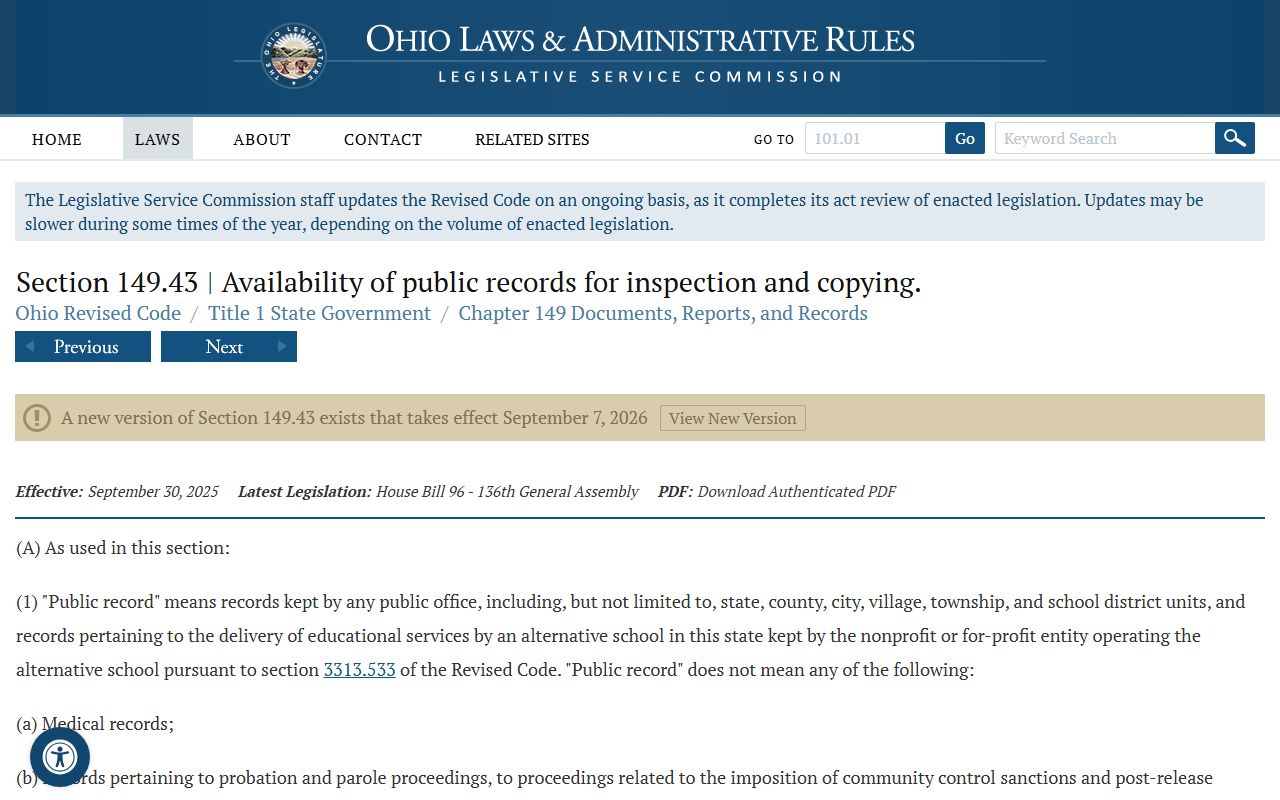
Public-records law does not override a court's sealing order or a statute that protects a specific record.
Ohio Arrest Notifications
VINELink can help track custody-status changes after an arrest where the agency participates. It is not the court docket and does not replace a clerk search. Its role is notification, while court records answer the charge and case-status questions. The Ohio Attorney General material says victims and concerned citizens may register for phone, email, text, or TTY notification when custody changes.
The Ohio Attorney General victim-notification page explains the statewide VINE notification route.

Use notifications as a supplement to the court docket, jail roster, and official custody agency.
Ohio Court Record Limits
Public access is not the same for every case. Juvenile matters, sealed records, expunged records, victim information, protected addresses, medical details, and some investigative material may be limited. A public docket can also omit documents that are available only at the clerk's office or only to authorized parties. If the jail roster shows a charge but the public court index does not, the next step is to check spelling, county, case number, filing delay, court level, and whether the case moved from municipal court to common pleas court.
Ohio's public-records law helps explain access, but the court's own sealing orders and case-management rules control many details. For a complete history after a jail arrest, compare the booking record, the court docket, the prosecutor's filed charge, and any later ODRC or supervision record.
A court non-result is not the same as no case. The charge may be in a different court, entered under a middle initial or alias, pending grand-jury action, still awaiting clerk indexing, or hidden by a valid access restriction. The jail record gives the custody event, while the court record gives the legal case that follows it.
Public Record Search
Sponsored Results